When is flexible the right choice?+
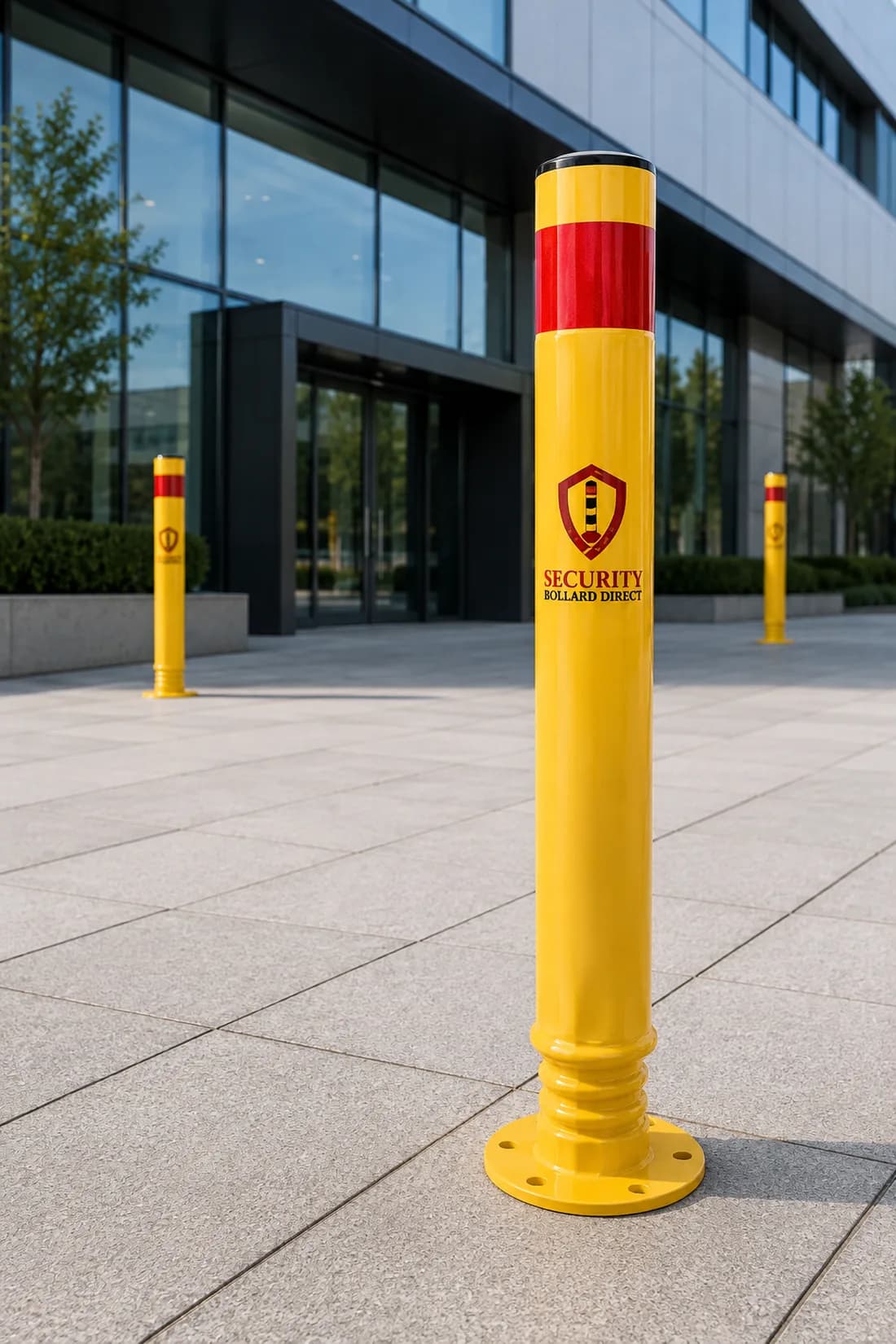
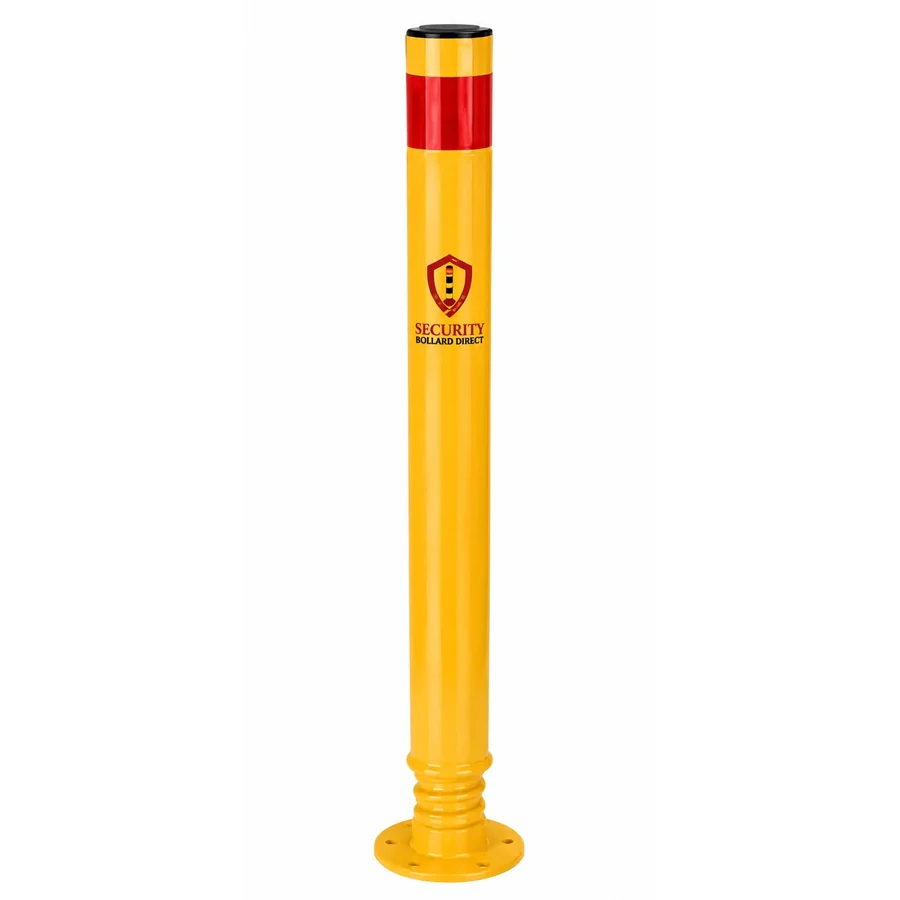
When contact is routine rather than rare. A drive-thru lane, a tight turn, a wash bay: anywhere a rigid post gets clipped several times a year. The spring absorbs the hit and stands the bollard back up, which takes the replacement off your maintenance list.
When is it the wrong choice?+
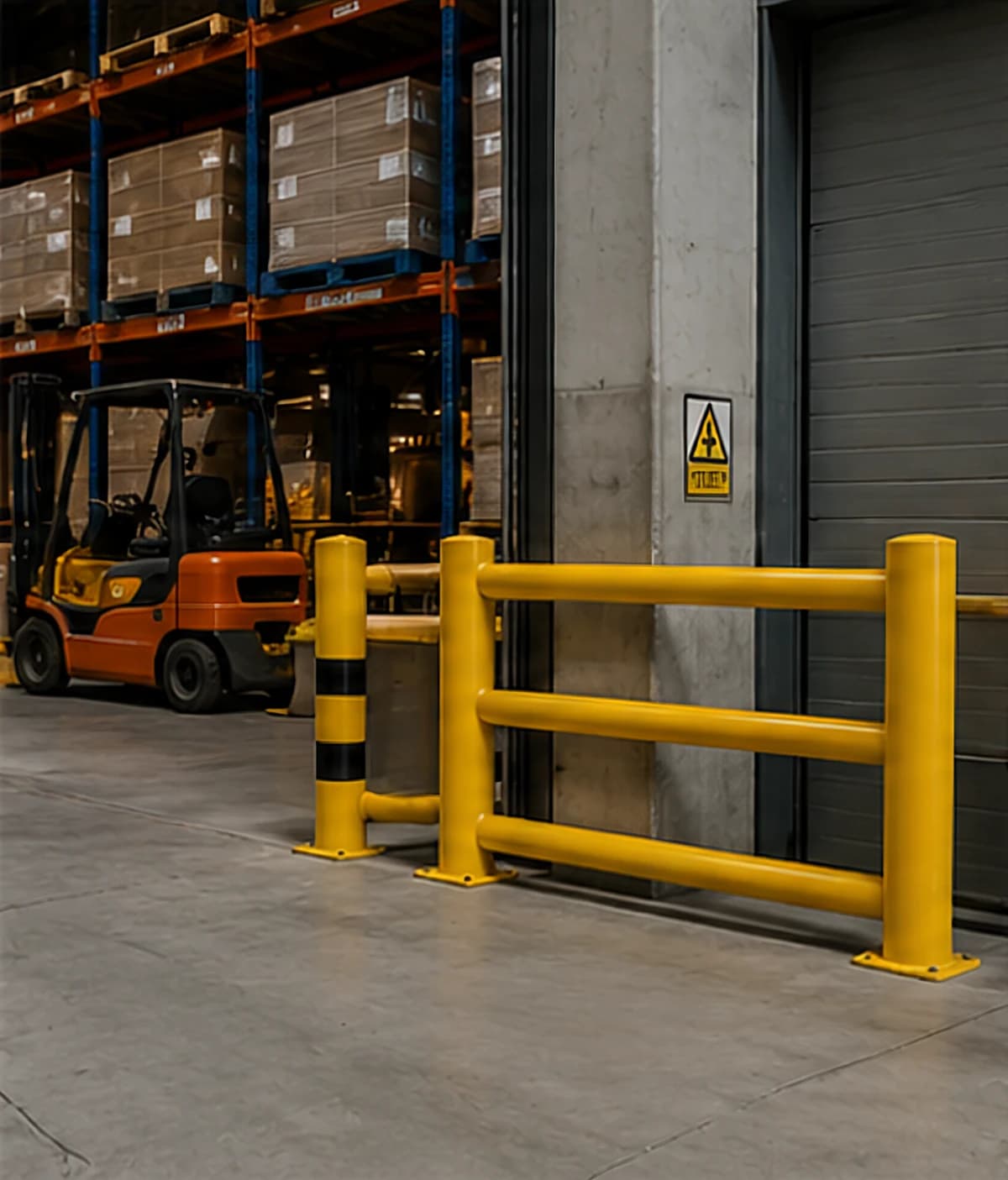
When the job is to physically stop a vehicle. A flexible bollard is designed to give way. If you are protecting glazing, a gas meter or a dock door, you want a fixed steel post, not this. Tell us what is behind the bollard and we will say which one the application needs.
Does it damage the vehicle?+
Far less than a rigid post does. That matters at customer-facing locations, where a scraped bumper turns into a claim. It is one of the main reasons drive-thrus specify flexible over fixed.
How does it mount?+
Bolt-on base plate, anchored to concrete: no core drill and no sleeve to set into the surface. That also makes it straightforward to relocate if the lane layout changes.
Will it stop a truck?+
No, and it is not meant to. This is a guidance and delineation product that gives way on impact by design. It is not crash-rated. If your project requires certified anti-ram performance to ASTM F2656 or IWA 14-1, we will say so and refer you to a rated manufacturer.